

Why do small dogs teeth decay so quickly and what to do before going to the vet?

The first time the vet mentioned teeth to me, it was casually, almost offhandedly: “Small breeds can have problems, keep an eye on them.” I nodded and, frankly, immediately forgot about it. Well, teeth are teeth. She’s eating normally, so everything’s fine.
Three years later, I went for a routine checkup, and the veterinarian very calmly, without further ado, opened her mouth and showed me. There was tartar on several teeth, the beginnings of gum inflammation in one spot, and another detail I hadn’t noticed: she still had a baby tooth next to her permanent one. The adult teeth were crowded, slightly crooked, and plaque accumulated faster there.
What most small breed owners don’t know
Small dogs have small jaws and the same number of teeth as larger dogs. They are literally closer together, making it more difficult to clean between them. Small breeds often have more alkaline saliva, which accelerates tartar formation. Additionally, many Chihuahuas retain their baby teeth: their small bodies mean that teeth are shed more slowly or not completely.
All this means that dental problems in Chihuahuas are neither uncommon nor a sign of bad luck. They’re practically a predictable occurrence if preventative measures aren’t taken. Most owners discover this after their first cleaning under anesthesia and the bill from the clinic.
What does something you should pay attention to look like?
I didn’t notice the problem for a long time because I didn’t know what to look for. Her appetite was normal, she chewed on toys, and didn’t whine. Everything seemed fine from the outside.
But if I’d known what to look for, I would have noticed it sooner. Here’s what you can actually see for yourself if you peer into the mouth in good light:
-
Yellow or brown plaque at the base of the teeth, especially on the back molars.
-
Redness of the gums along the edge, even slightly.
-
An unpleasant smell from the mouth, not just “doggy”, but noticeably pungent.
-
Teeth that are uneven or two teeth are visible in one place (baby and permanent teeth next to each other).
-
The dog rubs its muzzle against the sofa or carpet, chews only on one side, or suddenly throws hard food.
I didn’t immediately connect the last two points with my teeth. I thought they were just a strange habit.
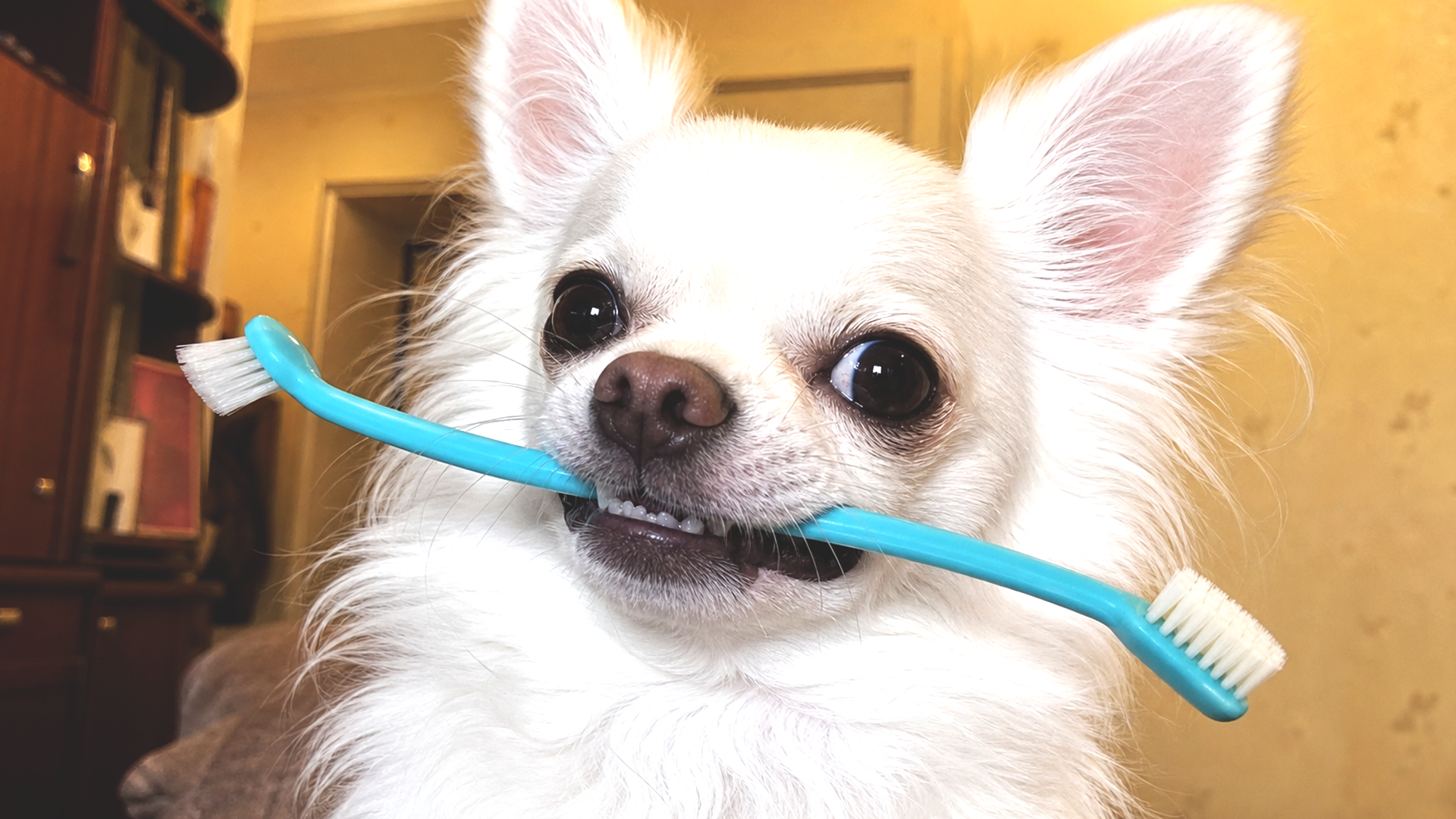
Brushing my teeth: how I started and why I quit the first time
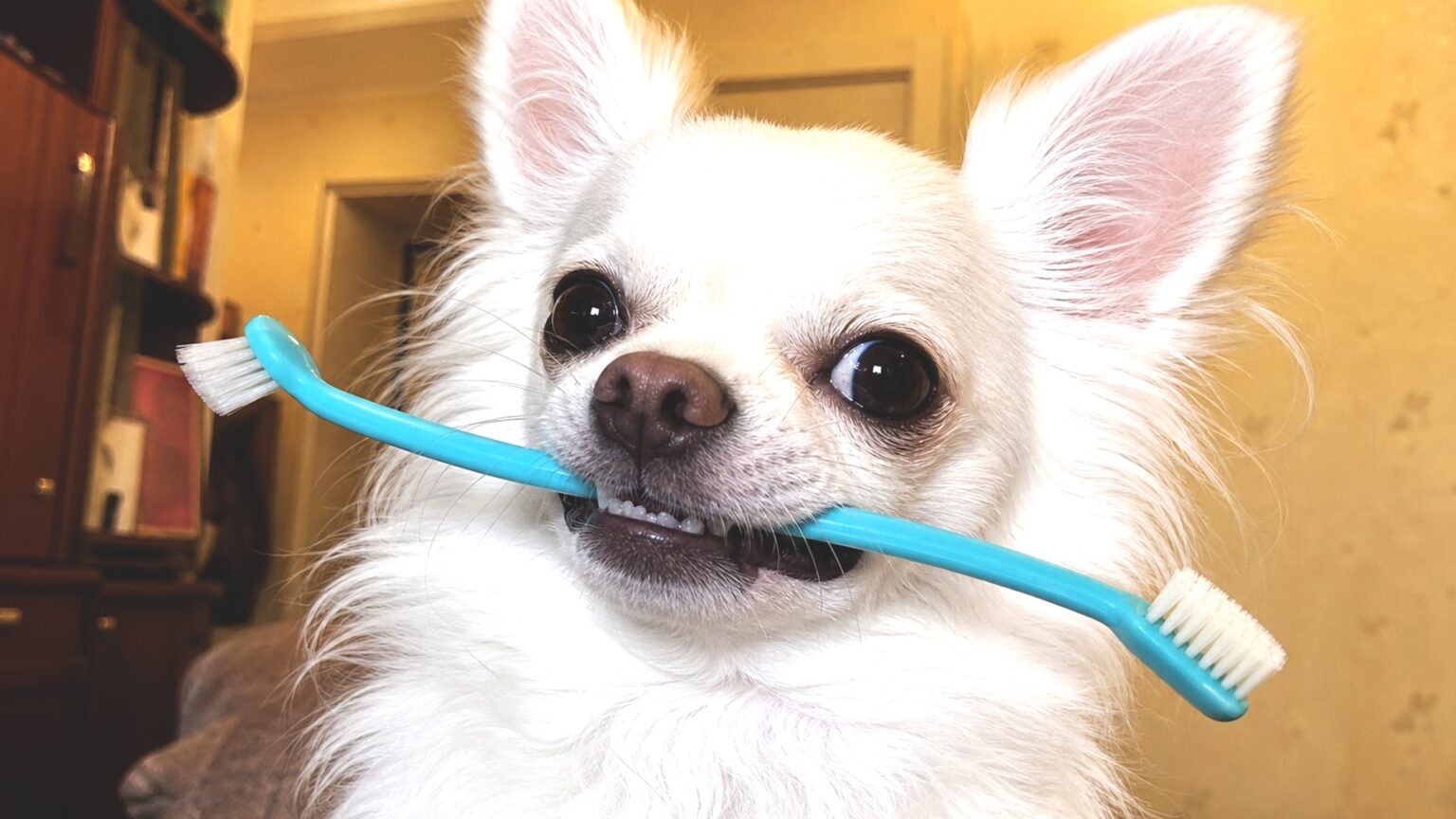
I was told to brush my cat’s teeth from puppyhood. I bought a toothbrush and special toothpaste, tried it once… and it was a complete failure. She struggled, I was nervous, and in the end I just put it all back in the drawer and decided: well, it’s not working.
The mistake was in the approach, not the idea. You can’t just shove a toothbrush into an adult dog who’s never been accustomed to having his teeth brushed. It’s stressful, and he’ll resist with every two kilograms of his being.
The correct method, which was explained to me later, doesn’t start with a toothbrush. First, just let her smell the toothpaste. Then touch her gums with your finger. Then, a finger wrapped in gauze. And only then, brush. All of this can take several weeks, and that’s normal. I started over again with roughly the same routine, and now she tolerates brushing. She doesn’t like it, but she tolerates it. That’s already a result.
What I do now and what really helps
After that tartar incident, I restructured my approach. This is what became my permanent practice:
-
Brush your teeth two to three times a week with a special dog toothpaste (human toothpaste is not allowed: fluoride is toxic to dogs).
-
Once every few months: I examine my teeth at home in good light, checking the plaque and gums.
-
Dental treats are a supplement, not a replacement for brushing. They help mechanically clean the surface, but they don’t reach the roots.
-
Once a year: a routine dental checkup with a veterinarian. If a professional ultrasonic cleaning is needed, it’s best to do it before inflammation occurs.
Professional cleanings for small dogs are performed under sedation. This isn’t a big deal if the dog is healthy and the veterinarian is competent, but it does add stress and expense. It’s much better not to resort to this on a regular basis.
What I’ll tell myself three years ago
Nothing major happened to her teeth. The tartar was removed, the baby tooth was extracted, and her gums returned to normal. But cleaning a two-kilogram dog under sedation is still stressful, and I was stressed out while she was under anesthesia.
The vet then told me something I’ve always remembered: “Small breeds often lose teeth by age seven or eight simply because owners didn’t know they needed to be looked after.” I felt a little awkward. But at least now I know.
___
After that cleaning, I look at her teeth a little differently when she yawns. Before, I’d just be charmed by her tiny fangs. Now I also check her gums. A habit I picked up too late, but better late than never.
Share in the comments whether you monitor your furry friends’ dental health.