How to Say “Hello” in Dog Language

If you translate a dog’s greeting into human language, you’ll get neither a “woof” nor an excited leap onto the dog’s chest. More accurately, it’s a calm, “I’ve noticed you, I recognize you, and I want to see if we can communicate.”
Dog greetings are composed of movements, scents, facial expressions, body position, tail position, gaze, and distance. So, a dog’s greeting isn’t a bark, but a combination of signals, sometimes very short.
One dog will approach, sniff your hand, and move away. Another will gently wag its tail, nuzzle your hand, and look into your face. A third will fetch a toy or circle your feet. All of these variations can be part of a greeting, but only within the context of the animal’s overall state.
A dog’s language doesn’t start with barking.
Barking is often considered a dog’s primary “voice,” but it doesn’t always play a primary role in greetings. Dogs can bark out of joy, excitement, anxiety, impatience, or an attempt to attract attention. Barking itself doesn’t translate as “hello.”
It’s better to evaluate the dog’s overall behavior rather than a single sound. A calm greeting involves moving freely, without stiffness, without freezing or striding toward you with a tense body. Several cues are important: the position of the head, back, tail, and ears, facial expression, and the overall tempo of the movement. It’s the combination of these cues that reveals whether the dog is friendly, wary, or uncomfortable.
In dog language, a hello is a signal of safe contact. The dog seems to be checking: “Who is in front of me? Familiar? Calm? Can I come closer?”
Why does a dog sniff when meeting someone?
For humans, greetings often begin with words or a handshake. For dogs, it begins with scent. Sniffing helps them gather information about another animal or person. By smell, dogs can determine where a person has been, what scents they’ve brought with them, who they’ve been in contact with recently, and whether anything has changed in their condition.
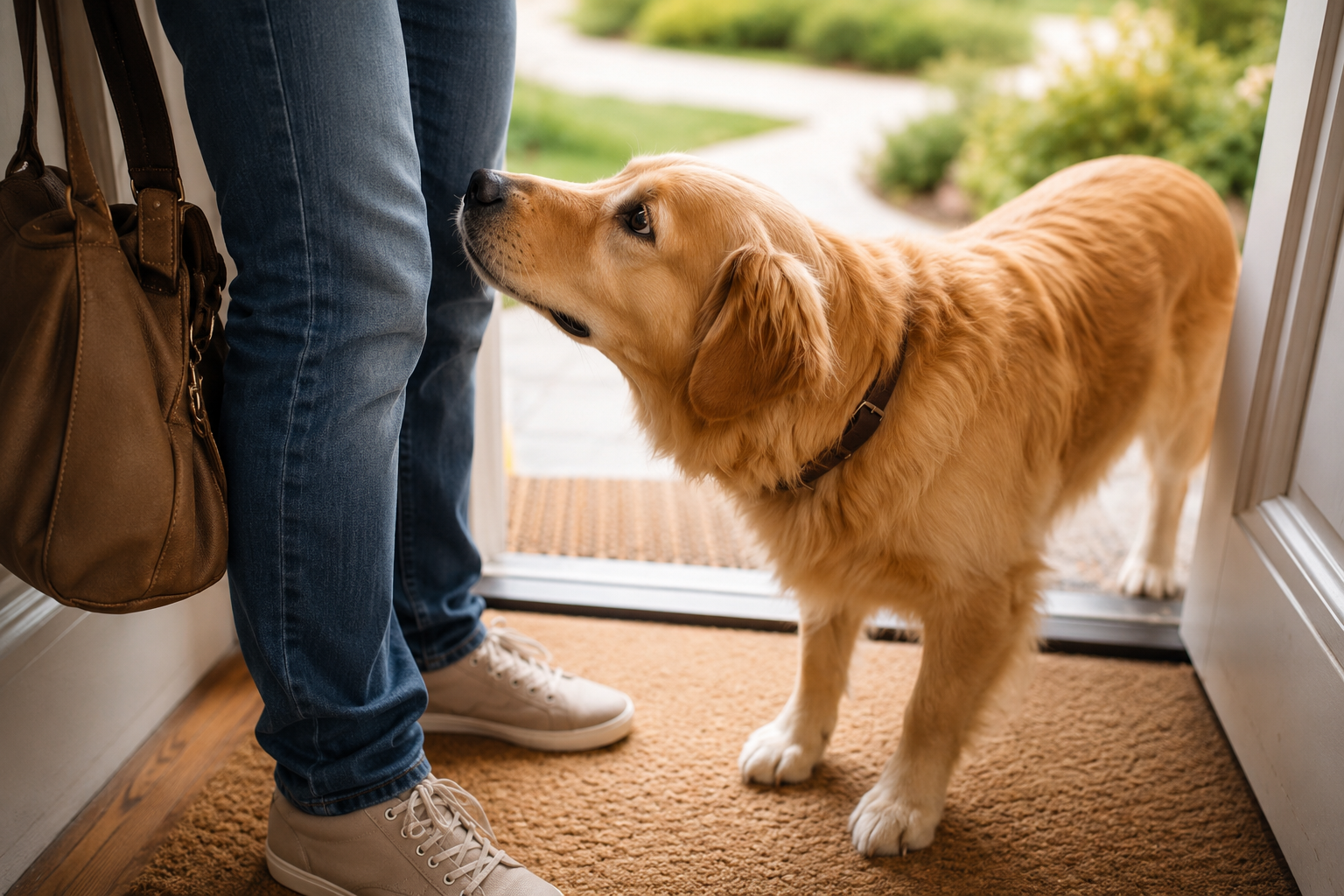
Research shows that dogs are able to detect odor cues associated with, for example, human stress. Therefore, sniffing upon meeting someone isn’t “bad manners,” but a natural part of canine communication. This is why a dog may first sniff a shoe, pants, hand, or bag before moving on to more noticeable contact.
What a calm dog’s “hello” looks like
The most relaxed greeting is quite restrained. It’s not cinematic, not boisterous, and doesn’t require jumping or yelping. The dog may approach in a gentle arc, stop at a comfortable distance, sniff, glance briefly, and gently wag its tail. The body remains supple, the movements free, and the mouth relaxed.
After a long separation, greetings can be more expressive. The dog greets its owner at the door, moves its entire body, brings a toy, rubs its side, and offers its chest or neck for petting. This is no longer simply a test of contact, but an emotional encounter with a significant person. But even here, it’s impossible to reduce everything to a single sign. Jumping on a person doesn’t equal love. Sometimes it’s an excess of excitement and a habit of seeking attention through force.
The tail doesn’t always say “I’m glad”
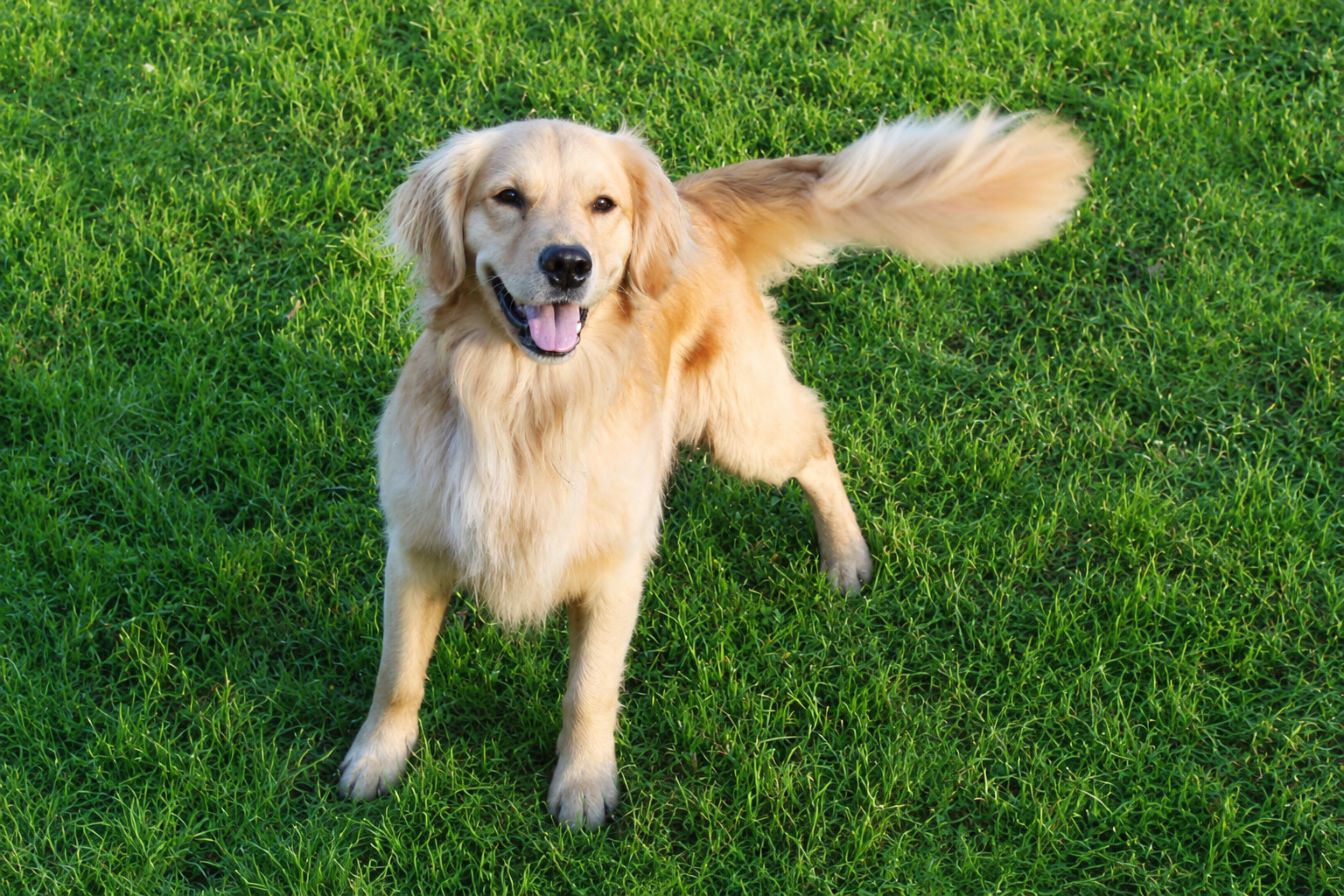
A wagging tail doesn’t always indicate happiness. Soft, sweeping tail movements in a relaxed stance are more often associated with a calm, friendly attitude. A stiff, rapid, or high-pitched wag in a tense dog, however, may indicate excitement, alertness, or internal tension rather than happiness.
When is it no longer a greeting?
A dog may approach you not only out of friendliness. Sometimes it will close the distance to check for a threat, stop a person, or express tension.
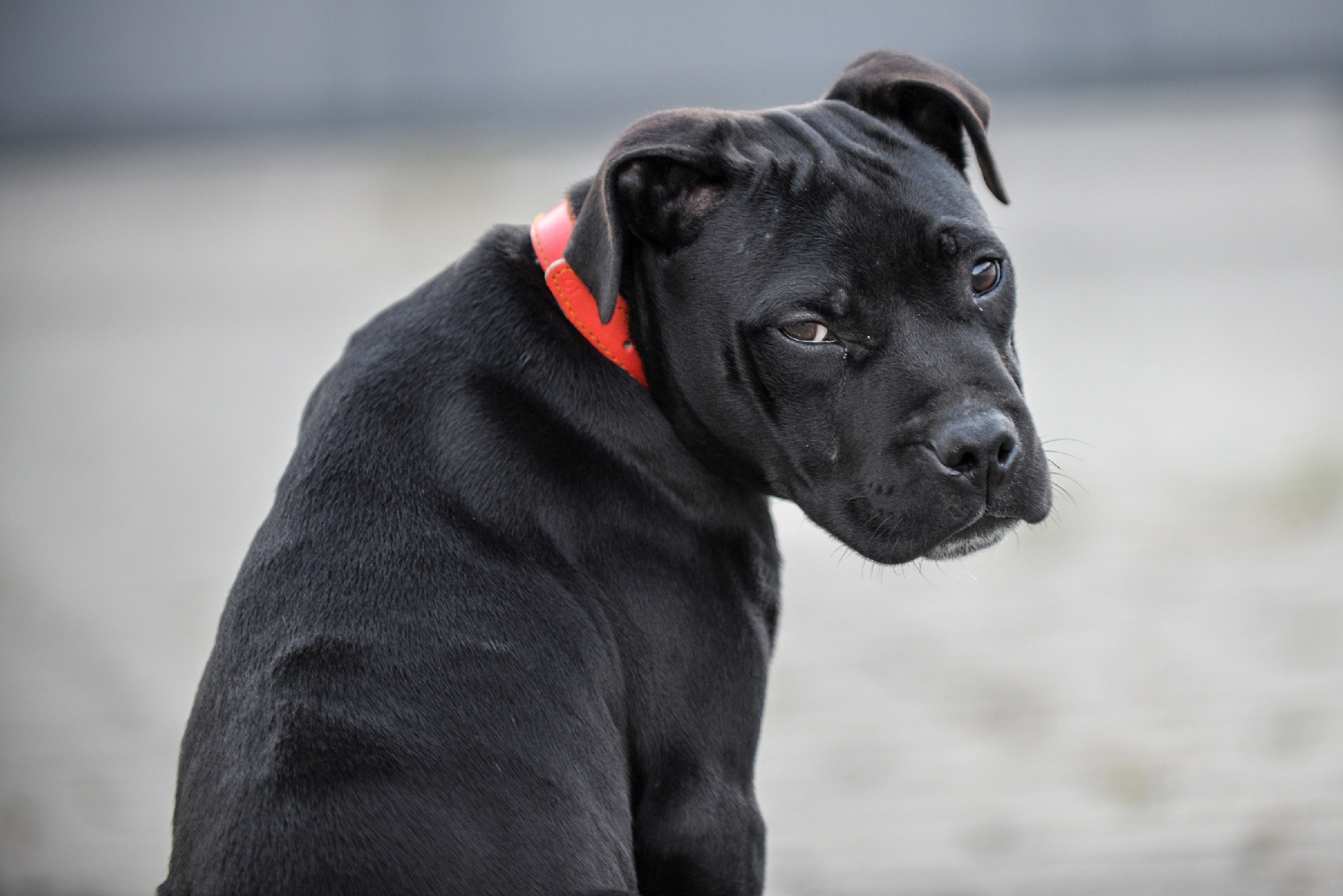
Discomfort may be indicated by:
-
fading;
-
head abduction;
-
frequent licking of the nose;
-
tucked or stiffly raised tail;
-
tense back;
-
going to the side;
-
growl;
-
a fixed, unmoving gaze.
These signals shouldn’t be ignored. Not every encounter is comfortable for a dog. In some situations, they’ll calmly engage, while in others, they’ll maintain their distance and signal that they need more space.
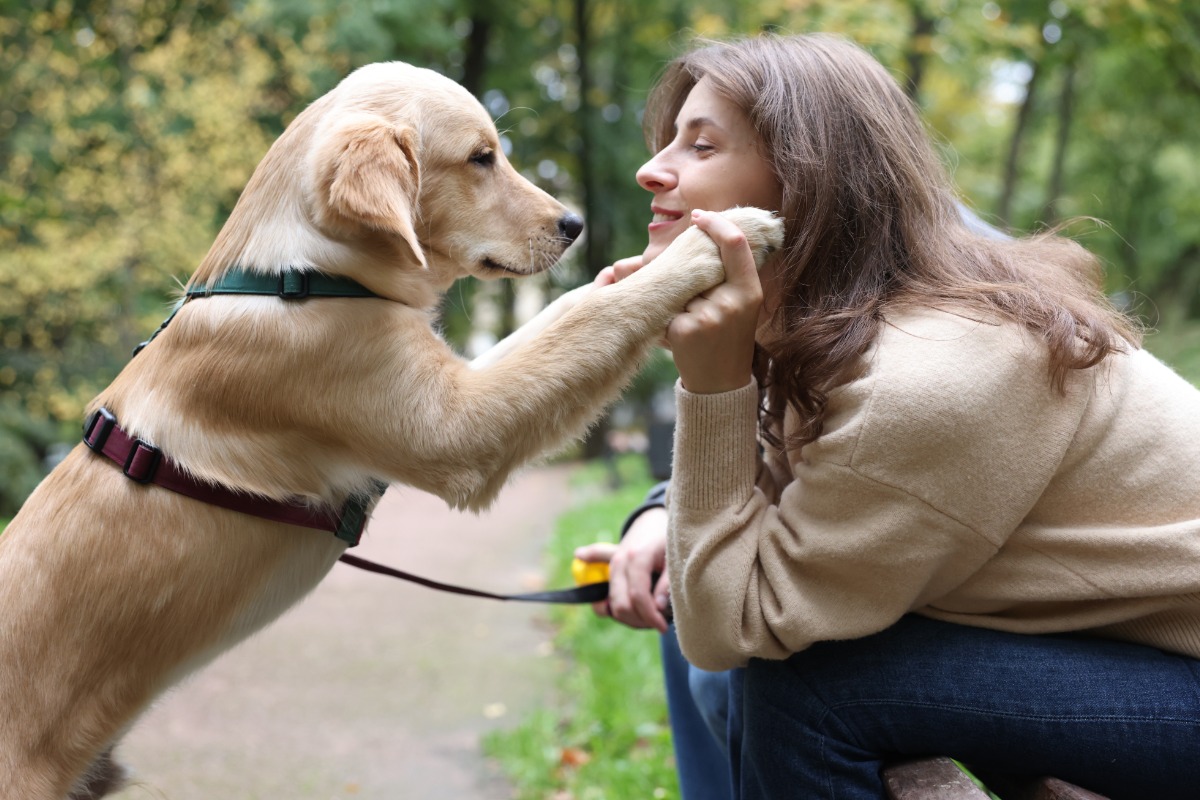
Be especially careful with unfamiliar dogs. Avoid leaning over them, reaching directly toward their muzzle, patting their head, hugging them, or staring into their eyes. While this may be a friendly gesture for a human, it could be pressure for a dog.
How to properly say “hello” to a dog
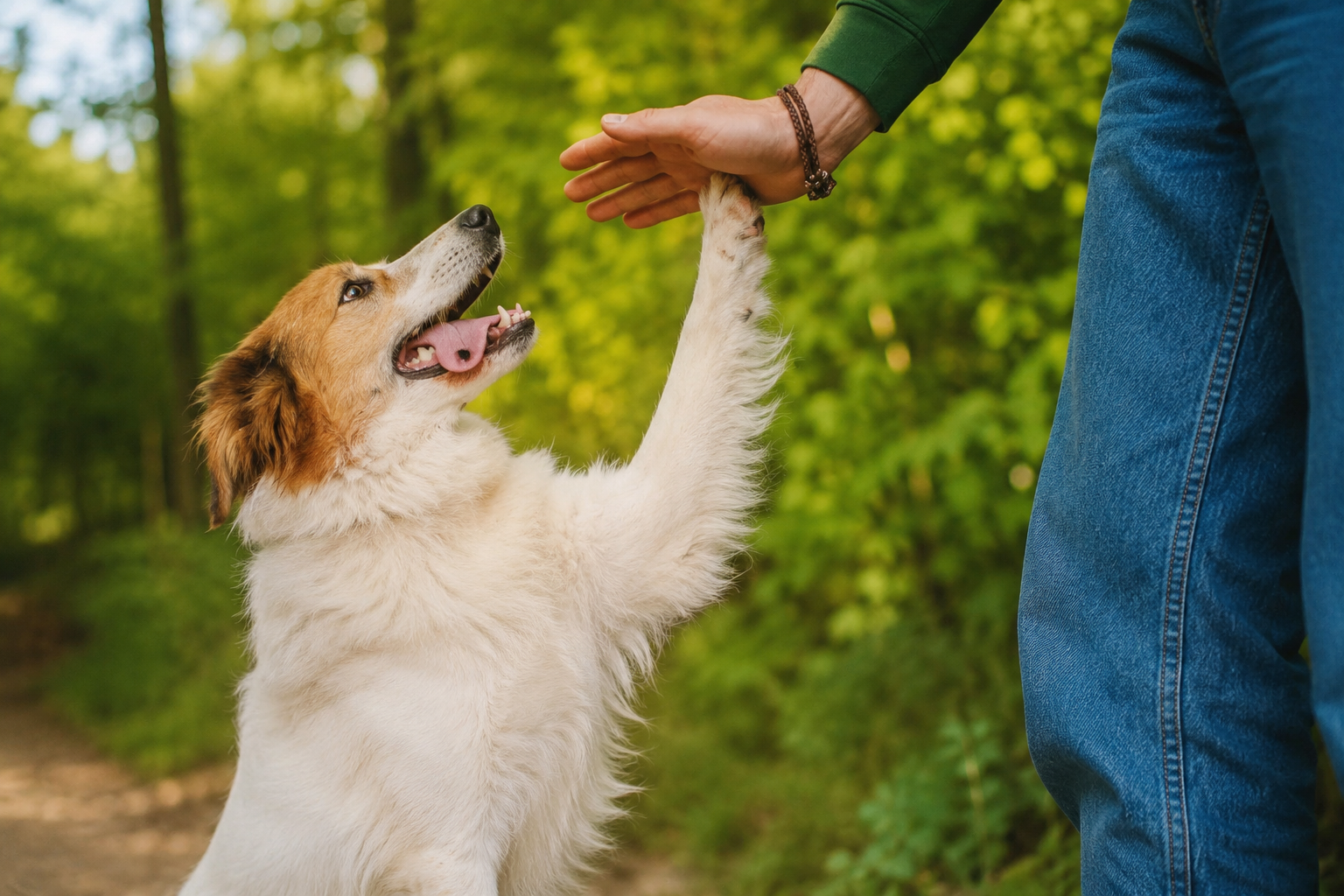
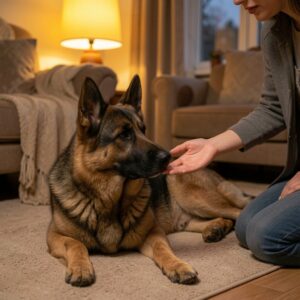
The best human greeting for a dog is calm and unobtrusive. Approach gently, speak evenly, and don’t hover. Allow the dog to close the distance on its own. Don’t suddenly bring your hand to its nose. Stay relaxed and don’t block the animal’s escape route.
If the dog approaches, sniffs, and remains nearby, you can gently pet its chest, flank, or the side of its neck. The head, paws, tail, belly, and ears are too personal for many dogs, especially during initial contact.
You can test comfort with a short pause. Pet the dog for a few seconds, then stop and watch its reaction. If it stays close, moves gently, reaches for your hand, or asks for more, it’s likely enjoying the contact. If it turns away, moves away, freezes, licks its nose, or tenses, it’s best to stop petting and give it some space.
How do dogs greet each other?
Greetings between dogs aren’t necessarily like the human “come face to face and say hello.” A direct approach can increase tension, especially if the animals are unfamiliar, tense, or already agitated.
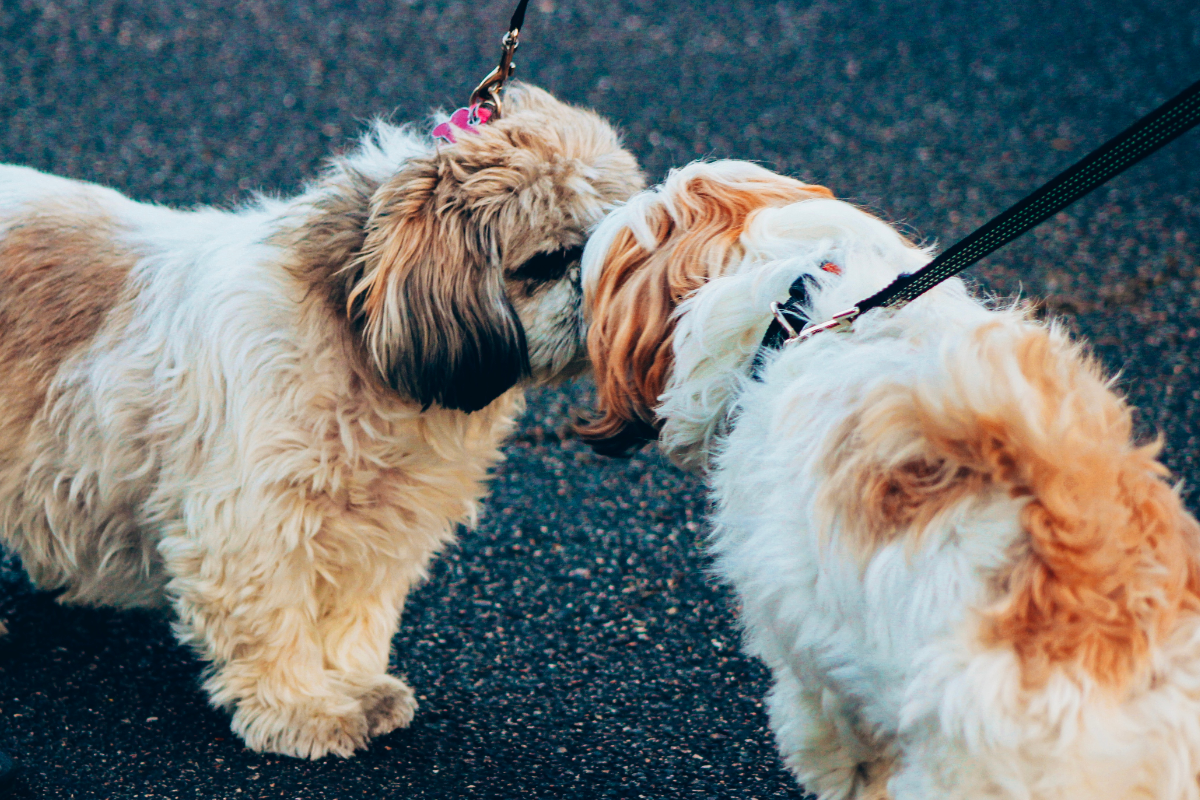
A more relaxed encounter often appears more relaxed: the dogs close the distance without rushing forward, may approach in an arc, briefly sniff each other, assessing each other’s posture, movement, and readiness for contact. One dog sniffs the muzzle, the other the side, neck, or the area around the base of the tail. After this, they may separate, continue the walk, or engage in play.
A brief separation after sniffing doesn’t indicate a fight or coldness. For dogs, this is a normal form of calm interaction: they’ve received the necessary information and haven’t pursued the interaction further.
The game begins when both dogs show a willingness to continue interacting. If one jumps and the other freezes, turns away, walks away, or hides behind the owner, this is no longer mutual play but rather intrusive contact on the part of the more active dog.