
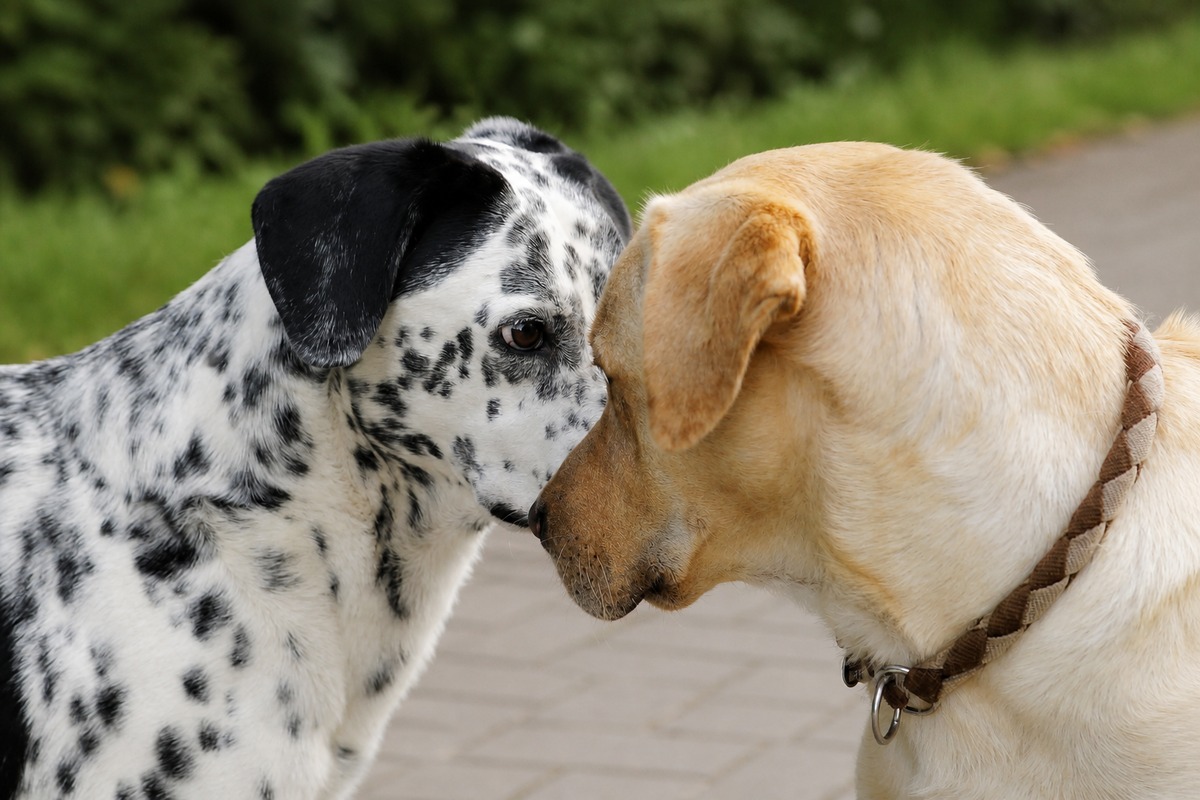
Instinct or Emotion: What Dogs Feel During Mating

Instinct or emotion? This dilemma arises among owners far more often than you might think when it comes to mating. The desire to understand what an animal is experiencing at this moment is completely normal. The short answer: dogs have physiological reinforcement and strong biological motivation (especially males). But why don’t biologists and veterinarians use the familiar word “pleasure” to describe this? Let’s find out.
Proven facts and gaps in research
Direct studies on whether dogs enjoy mating are virtually nonexistent. This isn’t a scientific gap—it’s a deliberate caution. Scientists lack the tools to delve into an animal’s subjective experience. Therefore, veterinary science relies on other concepts: sexual desire, arousal, receptivity, hormonal response, and behavioral motivation.
Motivation drives the search for a partner, reinforcement reinforces behavior, and pleasure is a subjective experience, inaccessible to an outside observer. Conflating them means drawing conclusions for which science simply has no basis.
Hormones: Physiology instead of emotions
Cortisol, oxytocin, prolactin, and testosterone levels were measured in trained male dogs during manual semen collection, both in the presence and absence of a female dog in estrus. The authors viewed these parameters as markers of both reproductive physiology and stress. No significant hormonal changes caused by the procedure itself were detected.
The study is indicative in its methodology: hormones, behavior, and physiological responses—things that can be objectively recorded—are measured. The animal’s subjective experience does not fit into this framework.
Male dogs: arousal as a neurophysiological program
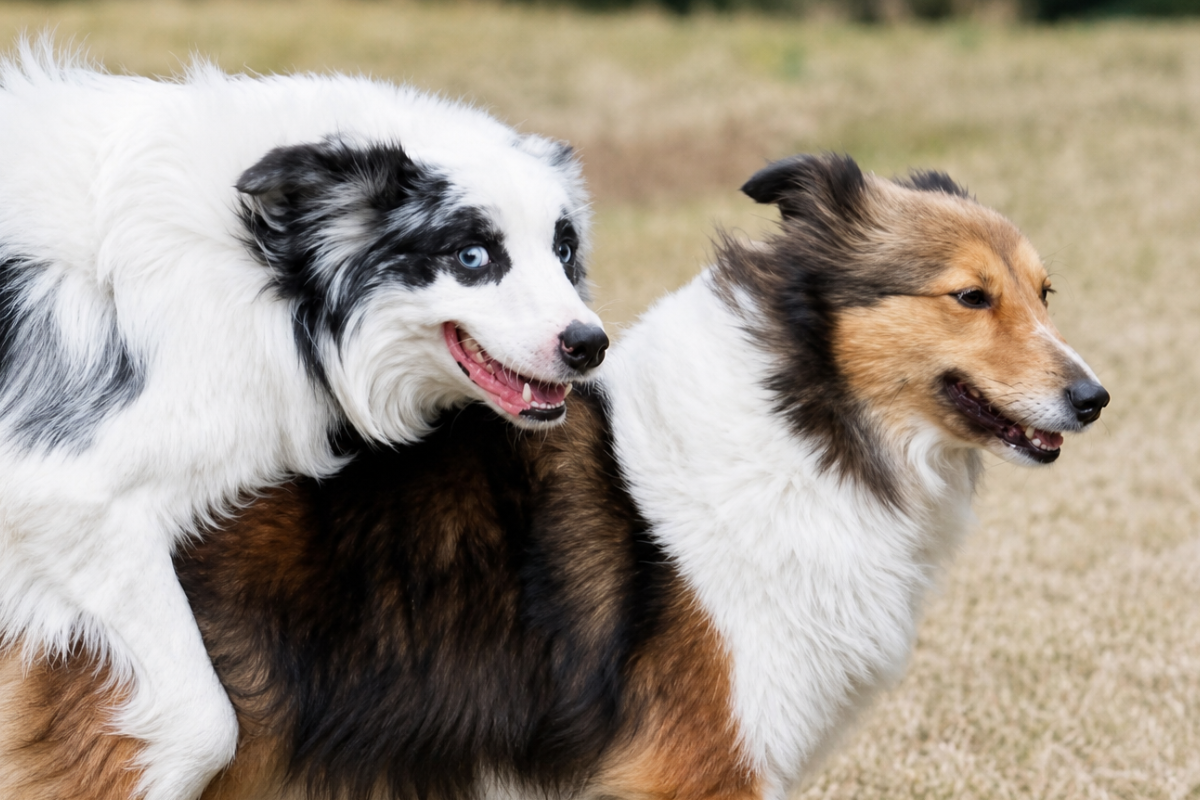
In male dogs, the pattern has been best studied. The scent of a female in estrus triggers a cascade of behavioral responses: courtship, mounting, friction, intromission, and ejaculation. After intromission, the pace of friction accelerates, followed by ejaculation—veterinary sources describe this as an “intense ejaculatory response” associated with components of the copulatory clasp and accompanied by a rise in testosterone.
Spinal reflexes are not synonymous with conscious experience
The key point: a significant portion of these reactions—including ejaculation and erectile dysfunction—are mediated by spinal reflexes. This is a powerful neurophysiological reproductive program that operates largely autonomously. Calling it “pleasure” is to project a human category onto a fundamentally different mechanism.
The reward system in mammals is generally evolutionarily ancient, and dogs have one. It’s tentative to speculate that sexual behavior activates its components. But this is speculation, not proven fact.
Bitches: Selectivity is not the same as pleasure
With female dogs, things are more complex—both behaviorally and interpretively. During estrus, the female accepts the male: she stands, holds her tail back, and allows him to mount her. This is called receptivity. It’s a behavioral state, not evidence of subjective experience.
Field studies of free-ranging dogs have revealed something interesting: females exhibit marked selectivity. They prefer males with higher status and reject those who exhibit intimidating behavior. Females are not passive mating objects; they possess behavioral agency.
But being selective in mate choice doesn’t necessarily mean dogs enjoy mating in the same way humans do. These are two different things. A preference for one male over another may be explained by a reproductive strategy, not anything resembling sexual pleasure.
Copulative lock: normal, alarming or painful?
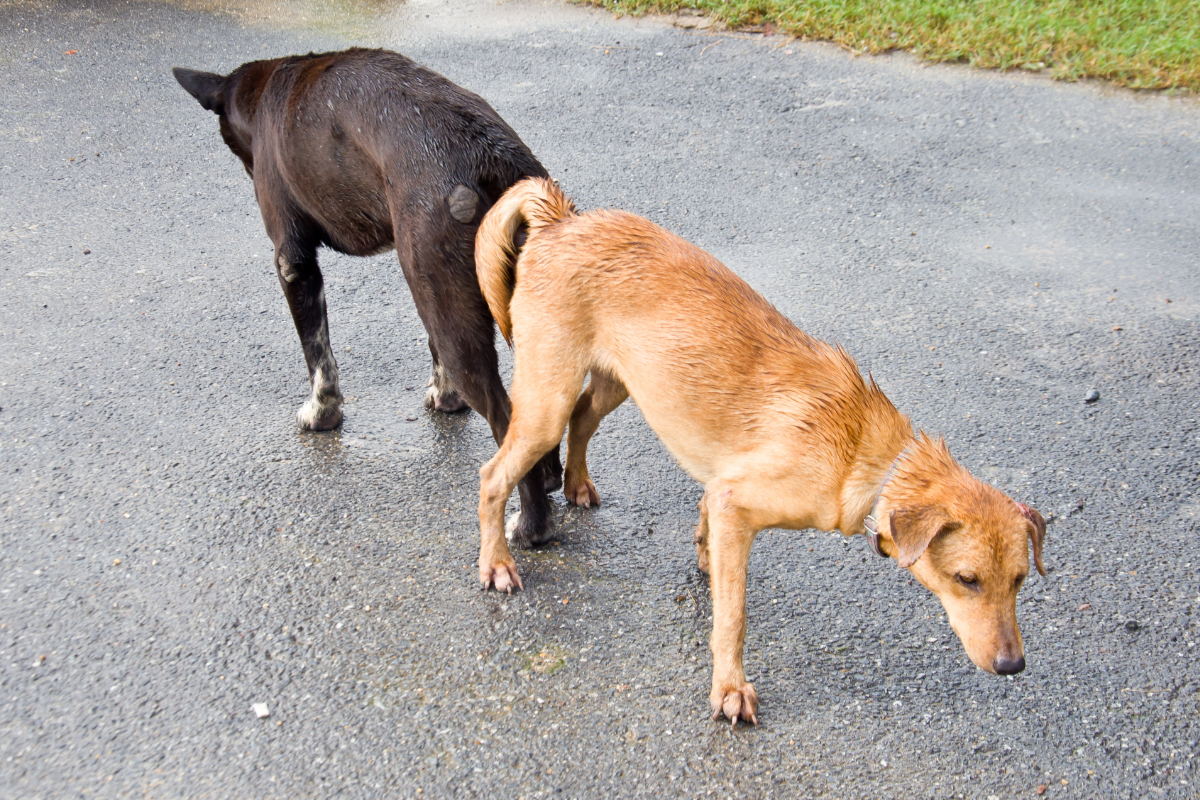
After intromission, the male dog’s penile bulb swells. The female’s vestibular muscles contract reflexively, and the animals become physically connected for a time. This is called a copulatory clasp. According to IVIS veterinary data, the presence of a clasp is considered a fairly reliable sign of ejaculation.
When a lock becomes a problem
During normal mating, a copulative lock in dogs is not considered a pathology and usually shouldn’t be painful. However, it can appear distressing: animals sometimes whine, shift positions, tense up, or try to move, especially if it’s their first time mating. This behavior doesn’t always indicate pain. It can be associated with unusual movement restriction, excitement, stress, or an attempt to find a more comfortable position.
The lock becomes a problem when trauma, inflammation, strong resistance from one of the animals, or human intervention are added to the physiological mechanism.
Pain and damage may occur in the following situations:
-
when attempting to forcibly separate the dogs before the lock is naturally completed;
-
with a significant difference in the sizes of animals;
-
in case of inflammation of the genital tract, pain in the vagina, prepuce or penis;
-
in case of unwanted mating, if it is accompanied by fighting, sudden movements and severe stress;
-
in case of injury to the penis, vagina or external genitalia.
Is it even possible to talk about “pleasure” in animals?
This is a question from the field of cognitive ethology—the science that studies the consciousness and psyche of animals. Scientists don’t deny that mammals have affective states—something akin to positive and negative experiences. But the transition from “animals have a reward system” to “animals experience pleasure” requires much more evidence.
With dogs, the situation is this: there is sexual desire, arousal, receptivity, hormonal responses—all of this is physiologically documented. There is behavioral reinforcement—mating as an action that the animal actively seeks. The subjective experience of this action remains hidden.