


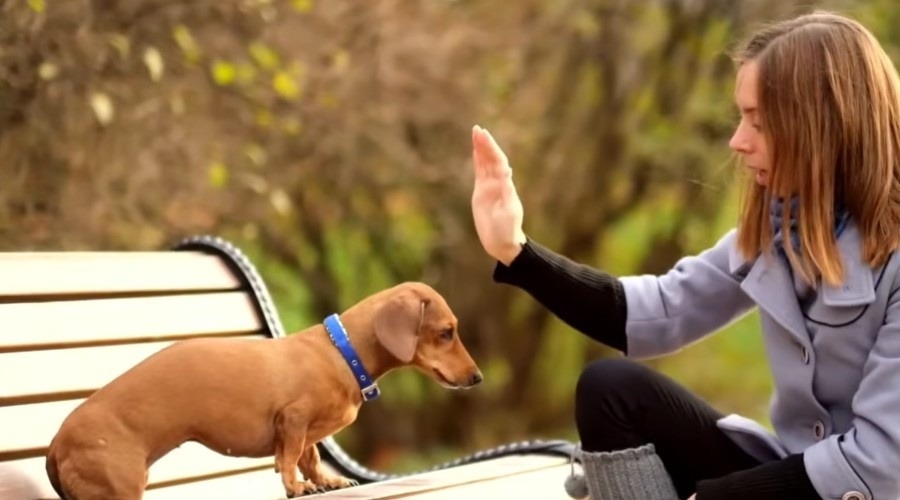
5 Reasons Why Dachshunds Are Stubborn in Everyday Life

The dachshund isn’t just a dog; it’s a concentration of personality, packed into a compact, elongated body. To understand why dachshunds are stubborn, you need to delve into their genes, history, and remarkable psychology. Let’s look at the five main reasons why these dogs are considered the most stubborn in the world.
1. Legacy of the Underground Gladiator
The first and foremost reason lies in the breed’s historical purpose. The dachshund is a professional burrow hunter. It was bred to hunt badgers—strong, ferocious, and extremely dangerous animals in confined spaces.

When a dachshund enters a burrow, it finds itself alone with its enemy. Its owner remains somewhere up there, a meter underground, unable to give commands or suggest what to do. At this point, the dog must make decisions on its own. Its life depends on its initiative and, if you like, “self-will.”
What we call stubbornness in everyday life—for example, when a dachshund refuses to go for a walk in the rain—is actually autonomous thinking. A dachshund isn’t used to blindly obeying orders. It’s used to analyzing the situation.
If she thinks stepping into a puddle is a bad idea, she simply won’t do it. It’s not a whim, it’s a self-preservation instinct and a habit of trusting only her own opinion.
2. Highly sensitive intelligence and the “crisis of motivation”
There’s a myth that dachshunds are difficult to train because of their low intelligence. In fact, it’s quite the opposite. Dachshunds are too smart to do anything that doesn’t clearly benefit them.
While a German Shepherd is willing to fetch a stick a hundred times simply because its owner says so, a dachshund will look at you on the third throw with a silent question: “Do you really need it that much? Well, go get it yourself.” A dachshund’s stubbornness often stems from a lack of motivation.
For a dachshund, every command is a bargaining chip. She’s constantly weighing the value: “Is this piece of cheese worth me tearing my belly away from my warm blanket?” If the reward isn’t enough, she’ll stick to her guns. Training a dachshund is always a negotiation, where you have to be a persuasive diplomat, not a dictator.
3. “Napoleon syndrome” and territorial leadership
Despite their small stature, dachshunds feel at heart like at least a Doberman, if not a lion. They have a complete lack of awareness of their own size. This gives rise to a certain form of stubbornness associated with dominance.

A dachshund sincerely considers itself an equal member of the family, and sometimes even its leader. If you try to oust it from its favorite chair, you’re not just asking the dog to move—you’re encroaching on its property.
The resistance she puts up at such moments (including the famous “petrification” or disgruntled grumbling) is dictated by her high self-esteem. She’s not being stubborn for the sake of being mean; she’s defending her boundaries.
4. The Olfactory Effect: When the Nose Turns Off the Ears
A dachshund is, first and foremost, a nose. Its mind maps the world using scents. If, while out for a walk, a dachshund catches “that one” scent (a mouse, a cat, or the neighbor’s Pomeranian), the rest of the world ceases to exist for it.
At such moments, the dog undergoes a cognitive switch. The signal from the nose to the brain is so powerful that auditory signals (your cry, “Come!”) are simply blocked. This is biologically determined stubbornness.
The dog isn’t deliberately ignoring you—it’s in a state of deep concentration. For a burrower, losing the scent is tantamount to defeat, so it will tug on the leash or stand still until it has collected all the available information from the air molecules.
5. Emotional sensitivity and “resentments”
Dachshunds are master manipulators and very sensitive creatures. Their stubbornness is often demonstrative. If you raise your voice, come home late from work, or (heaven forbid) pet another dog in front of your jealous dog, expect an act of civil disobedience.
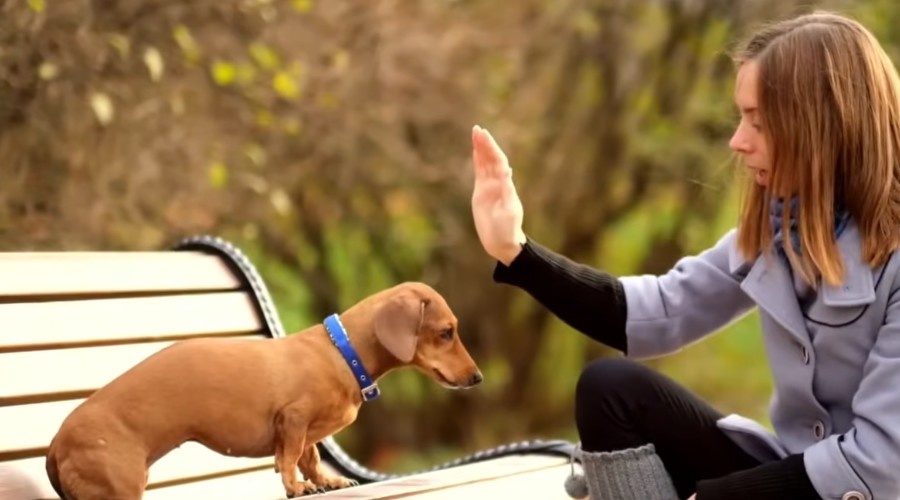
A dachshund may begin to ignore commands, demonstratively turn away, or pretend to have suddenly gone deaf. This is a form of passive aggression. Their stubbornness is a way of expressing their dissatisfaction with the quality of your service.
Unlike many other breeds, the dachshund remembers injustice for a long time and demands an apology – usually in the form of an unscheduled treat or an hour of scratching behind the ear.