



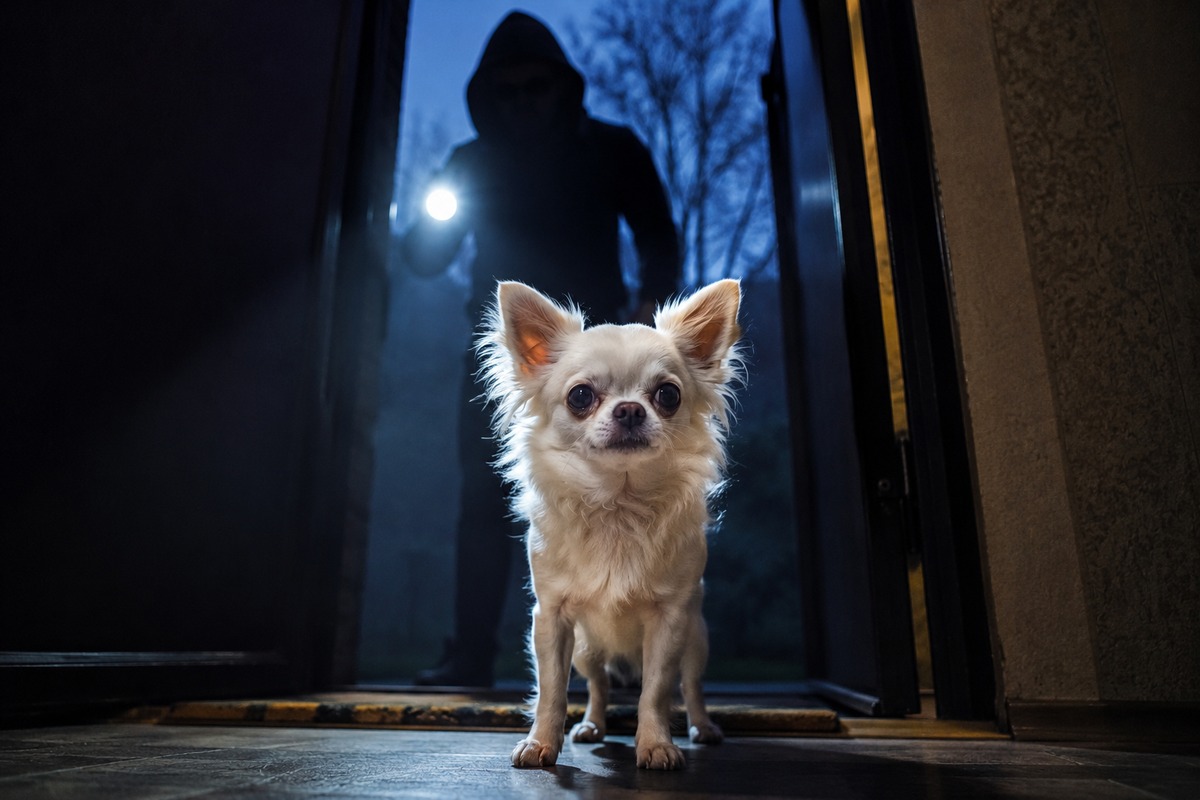
Can a Chihuahua be a guard dog?

Can a Chihuahua be a guard dog? It sounds funny, but it’s not that simple.
When my neighbor asked yet again, “Why do you need that rat? Does it even bark at strangers?” I didn’t bother explaining. I just smiled. Because the answer to that question is much longer than she thinks, and much more interesting than “of course not.”
A Chihuahua as a guard dog sounds like a joke. But if you look at what makes a dog a guard dog, the picture becomes unexpectedly more complex.
What does “guard dog” even mean?
Most people confuse two concepts that are actually different. A guard dog and a protection dog are not the same thing.
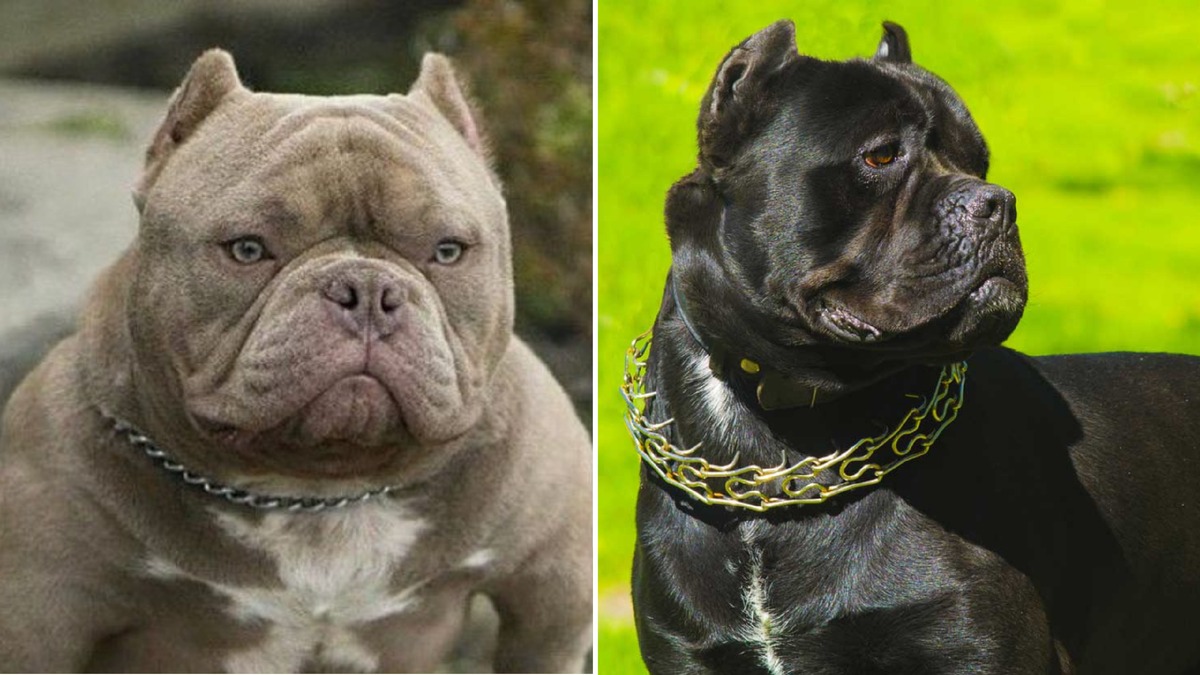
A guard dog physically protects a territory or a person. It must be large, strong, trained, and prepared to engage intruders. German Shepherds, Rottweilers, and Caucasian Shepherds—these are guard dogs. Chihuahuas are not on this list, and they shouldn’t be. There’s no argument there.
A guard dog does something different: it alerts. It hears, notices, reacts, and lets its owner know something is happening. And that’s where things get interesting. Because, frankly, a Chihuahua does this job very well.
Small dogs have keener hearing than many large breeds. This isn’t an exaggeration or a folk tale. A Chihuahua’s large, erect ears act like antennas, picking up sounds that humans miss. Footsteps outside the door, a voice in the stairwell, the creaking of the elevator on the next floor—they hear it all before you can even look up from your phone.
Why does she bark exactly when she shouldn’t?
This is where the most awkward part begins. Yes, a Chihuahua reacts to strangers. But she reacts to everything: rustling in the pipes, a cat in the yard, a TV commercial, the fact that you changed your slippers.
The problem isn’t that she barks at strangers. The problem is that she can’t filter. Her alert system works without any configuration: any sound, any movement, any change in her normal worldview triggers an alarm. And she doesn’t see the need to distinguish a real threat from the neighbor’s cat.
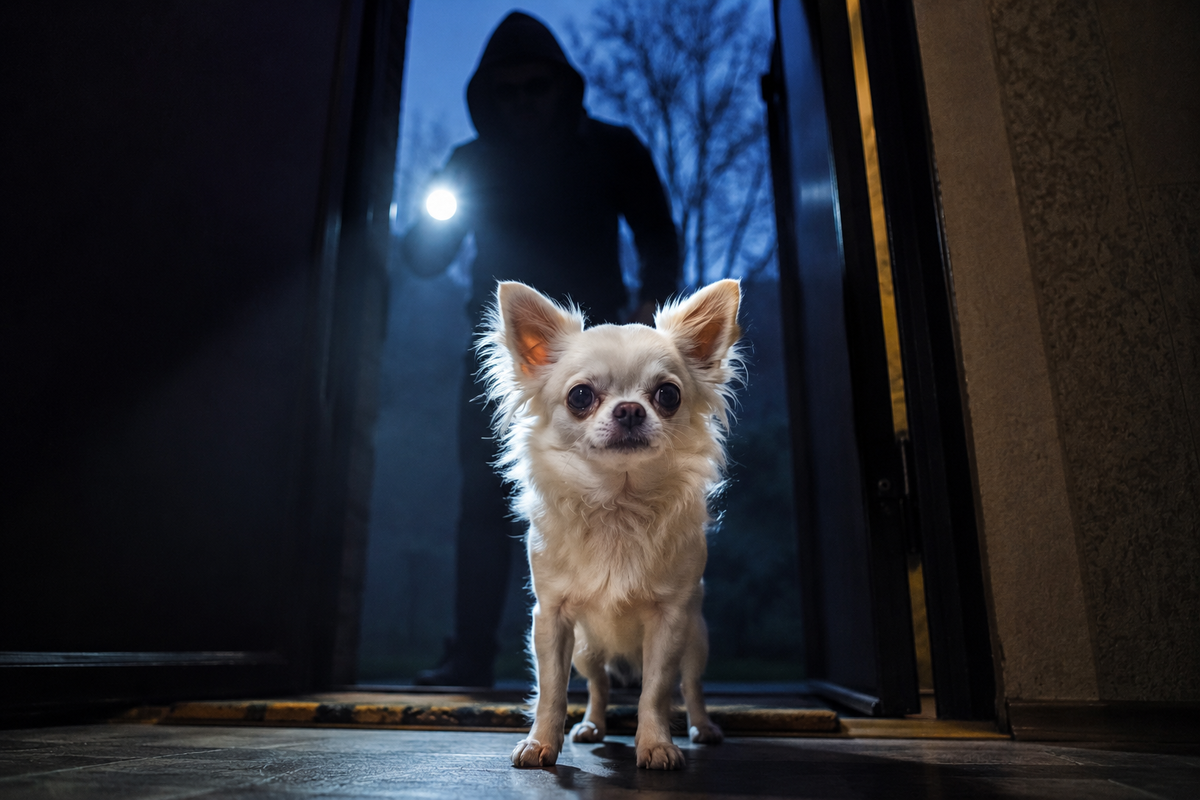
This is why Chihuahua owners eventually begin to ignore their dogs’ barking. It’s a survival reflex. Reacting to every bark can drive you crazy. But therein lies the paradox: a dog that barks at everything ceases to be a useful guard dog. People simply stop listening to it.
If barking isn’t calibrated, it’s meaningless. It’s like a car alarm that goes off at every loud noise—at some point, the entire yard stops responding.
What she actually notices before you do
I’ve already tested this in practice, and more than once. My dog starts to get restless about thirty seconds before the doorbell rings. Not always, but often. She stands up, looks toward the hallway, and pricks up her ears. Sometimes she growls quietly. Then the doorbell rings, and she starts screaming at the top of her lungs.
At first, I thought it was a coincidence. Then I began to notice that she reacted specifically to certain types of footsteps—heavy, unfamiliar ones. She didn’t react at all to my footsteps coming down the stairs. When she saw my husband, she’d wait silently by the door with her tail tucked in. When she saw strangers, she’d first tense up, then bark.
A veterinarian friend once told me something that I’ve never forgotten: small dogs aren’t evolutionarily designed to be hunters or protectors, but they are highly accurate observers. Their survival has always depended on how quickly they notice changes in their environment. It’s literally hardwired into them.
So, as a motion and sound detector, the Chihuahua works. As a physical defense, it doesn’t, and thank goodness for that.
What can you really expect from her and what you can’t?
Here’s an honest list of things I wish I’d read before getting a dog:
Chihuahua can really:
-
hear unfamiliar footsteps, voices and sounds before you do
-
distinguish “friends” from “foes” by sound and smell – and react differently
-
bark loudly enough for its size to alert the entire apartment
-
Don’t sleep while there’s a stranger in the house – even if they’re silent
-
notice changes in the environment that you hadn’t noticed before
A Chihuahua cannot and should not:
-
physically stop or frighten an adult
-
distinguish a real threat from everyday noise without special socialization
-
be silent when you want silence and bark when you want a warning – it doesn’t switch on its own
The last point is the most important. And the most honest.
Is there any way to use this?
Yes, but with realistic expectations. If you live alone and want someone to be the first to respond to a sound at the door, a Chihuahua can handle that. Not because she’s brave (although they can be quite bold for their size), but because she’s attentive and territorial.
If you need physical security, that’s a different story and a different breed.
A Chihuahua’s bark can be calibrated somewhat through training: teach the “quiet” command and reward silence in situations where the alarm was false. It’s time-consuming and requires consistency, but it works. I myself went through several months of this process, and now the barking has become at least a little more meaningful. Although “a meaningful Chihuahua bark” still sounds like an oxymoron.
One time, around midnight, she raised a real alarm. Loud, persistent, and wouldn’t let up. I got up and went out into the hallway—it turned out someone was tinkering with the lock on the next door!
Later, I learned that someone had tried to break into my neighbors’ apartment. Nothing happened—either the noise interfered, or they simply didn’t succeed. I can’t connect the two events directly. But I think about it every time someone asks, “Why do you need that little dog?”